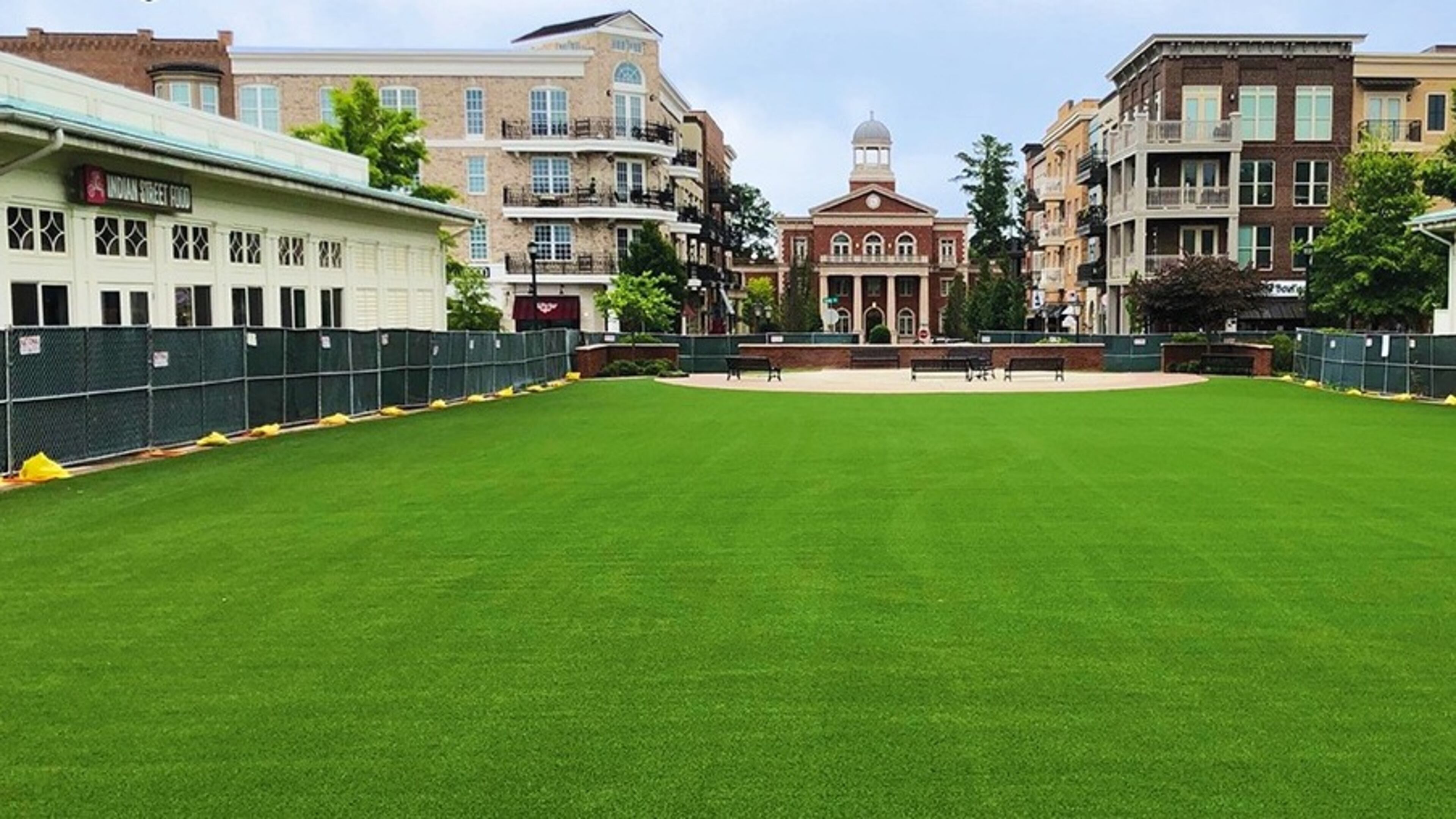
Service Overview
Artificial Turf Replacement in Richmond involves more planning than new installation in one critical way: the existing system's sub-base condition must be evaluated before replacement turf is specified. A turf surface that degraded early often points to a sub-base problem — inadequate compaction, poor drainage design, or soil instability — that will affect the replacement installation if not corrected. Turf Installation of Richmond evaluates existing sub-base condition as part of the replacement assessment so the new installation does not repeat the same failure pattern.
For Pecan Grove Plantation properties where the original installation predates the current understanding of root-aware edge anchoring, replacement is an opportunity to correct perimeter design and install edge systems that accommodate the ongoing growth of the neighborhood's protected oak and pecan trees. Homeowners who have dealt with cyclically lifting edges and replacement cycles driven by root pressure benefit most from a replacement that addresses root zone management as part of the new installation scope.
Long Meadow Farms large-lot properties and equestrian estate sections that installed turf in targeted yard areas several years ago often reach replacement timing when face weight has degraded to the point where pile recovery is inconsistent and the surface no longer bounces back from traffic. In these larger-footprint replacements, sub-base inspection is particularly important because large areas of compacted aggregate may have settled unevenly under seasonal soil movement on Fort Bend County's clay-dominant soils.
For families in Mission West, George Ranch, and Richmond neighborhoods zoned to Lamar CISD schools, replacement decisions often align with a change in how the yard is used — children growing older, a new pet, or a desire to expand the turf footprint to cover a larger portion of the property. Replacement scope is built around current usage expectations rather than the original installation goals.
What Is Included in Artificial Turf Replacement
Replacement scope is driven by sub-base condition assessment and current property usage requirements. Typical scope items include:
Existing Turf Removal and Disposal
The degraded turf surface and any failed seam tape, infill, and border materials are removed and hauled off the property.
Sub-base Evaluation and Correction
Exposed aggregate base is assessed for compaction, drainage, and root intrusion. Corrections are made before new turf is specified.
Updated Edge Anchoring System
Perimeter edge systems are evaluated and updated as needed — particularly relevant for Pecan Grove Plantation properties where root-aware anchoring systems may differ from the original installation.
New Turf Specification and Material Selection
Replacement turf is specified based on current usage patterns, expected traffic, and site conditions. Blade type, face weight, and infill are selected for current needs.
Full Installation with Seaming and Finishing
New turf is installed over the corrected base with full seaming, perimeter anchoring, infill application, and surface finishing.
Final Walkthrough and Updated Maintenance Guidance
Completed replacement is reviewed on-site. Updated maintenance recommendations are provided based on the new turf specification and current site conditions.
Turf Replacement Process
Replacement projects at Turf Installation of Richmond follow a structured assessment-first process that evaluates sub-base condition before new material is specified.
1. Replacement Assessment Visit
We evaluate the existing turf condition, probe sub-base integrity, assess edge and perimeter systems, and document root intrusion or drainage issues.
2. Scope and Specification
Replacement scope is documented including sub-base corrections, updated edge system recommendations, and new turf specification based on current usage.
3. Existing Turf Removal
Old turf, seam tape, infill, and failed border materials are removed. Sub-base condition is confirmed with the old material removed.
4. Sub-base Correction
Aggregate is added or recompacted as needed. Root intrusion areas are addressed. Drainage paths are confirmed or corrected.
5. New Turf Installation
Replacement turf is placed, seamed, and anchored to the corrected perimeter system. Infill is applied and broomed in.
6. Final Inspection and Documentation
Replacement surface is inspected against scope. Maintenance guidance updated for the new installation is provided.
When Replacement Is the Right Choice for Richmond Properties
Turf replacement is typically the appropriate scope when repair or maintenance cannot restore acceptable surface performance.
End-of-Life Turf on Pecan Grove Plantation Properties
Turf installations with UV-degraded pile, chronic root-lifted edges, and infill that can no longer be restored to adequate depth are replacement candidates — particularly when the original installation lacked root-aware edge systems.
Long Meadow Farms Large-Lot Footprints With Sub-base Settlement
Large turf areas on Long Meadow Farms properties with uneven surface caused by sub-base settling in Fort Bend County's clay soils benefit from removal and reinstallation over a corrected base.
Usage Change in Mission West and George Ranch Family Yards
Properties where children's play use has changed, a new dog has been added, or the homeowner wants to expand turf coverage use replacement as an opportunity to upgrade to a specification matched to current needs.
Commercial Turf With Visible Surface Degradation
Business properties along FM 359 and US-90A where turf appearance affects customer perception and the surface has degraded beyond serviceable condition.
Why Sub-base Assessment Matters for Fort Bend County Turf Replacement
Turf replacement that does not correct the underlying cause of the original failure is a predictable disappointment. Turf Installation of Richmond makes sub-base evaluation a required part of the replacement assessment because we have seen how frequently sub-base problems cause replacement installations to fail on similar timelines as the originals. Pecan Grove Plantation homeowners deserve replacement installations that address the root behavior specific to their trees. Long Meadow Farms property owners with large turf footprints deserve a replacement plan that corrects settlement-prone sub-base areas before new turf is specified. That is the replacement planning approach Turf Installation of Richmond applies.
Factors That Affect Turf Replacement Scope
Replacement pricing reflects existing system condition, sub-base correction requirements, and new installation scope. Key factors include:
Existing System Removal
Total turf area and disposal volume affect removal labor and haul-off logistics.
Sub-base Condition
Base profiles requiring significant recompaction, aggregate addition, or root zone management add to total scope time and material.
Edge System Updating
Properties replacing original edge systems with root-aware anchoring or upgraded border materials have additional material and labor scope.
New Turf Specification
Higher-performance or heavier-face-weight turf specifications for active yards or commercial applications have higher material costs than standard residential grades.
Total Installation Footprint
Large-lot and estate-size installations — common in Long Meadow Farms — have larger total scope than standard subdivision lots.
Service Area Coverage
Turf Installation of Richmond provides artificial turf replacement service throughout Richmond and Fort Bend County, including Pecan Grove Plantation, Long Meadow Farms equestrian sections, Mission West, George Ranch, Aliana, Rosenberg, Fulshear, Sugar Land, Needville, Simonton, Orchard, Wallis, Brookshire, and surrounding areas.
Frequently Asked Questions
Does Turf Installation of Richmond inspect the sub-base before specifying replacement turf?
Yes. Sub-base evaluation is a required part of the replacement assessment. We evaluate compaction, drainage, root intrusion, and aggregate profile before specifying the new installation.
How do you handle root-intruded perimeter areas in Pecan Grove Plantation replacements?
We document root growth direction and depth during the assessment and recommend an edge anchoring system that accommodates anticipated root growth. In some cases, a root barrier at the perimeter edge is included in replacement scope.
How long does turf replacement typically take for a Richmond residential property?
Most residential replacements — removal, base correction, and reinstallation — are completed in two to three days depending on installation size and sub-base correction requirements. We provide a specific timeline after the assessment.
Can I expand the turf footprint during a replacement project?
Yes. Replacement projects are a practical opportunity to extend coverage to adjacent areas. New areas are assessed for drainage and sub-base requirements and included in the total scope.
Is replacement typically more cost-effective than repeated repair on older turf?
When a turf surface has widespread UV degradation, face weight loss, or multiple sub-base failures, yes. We make a straightforward assessment during the repair or replacement evaluation and tell you which approach makes more long-term financial sense given the site conditions.
What happens to the old turf material?
Removed turf is hauled off the property as part of the replacement scope. Disposal is included in the project price.