Service Overview
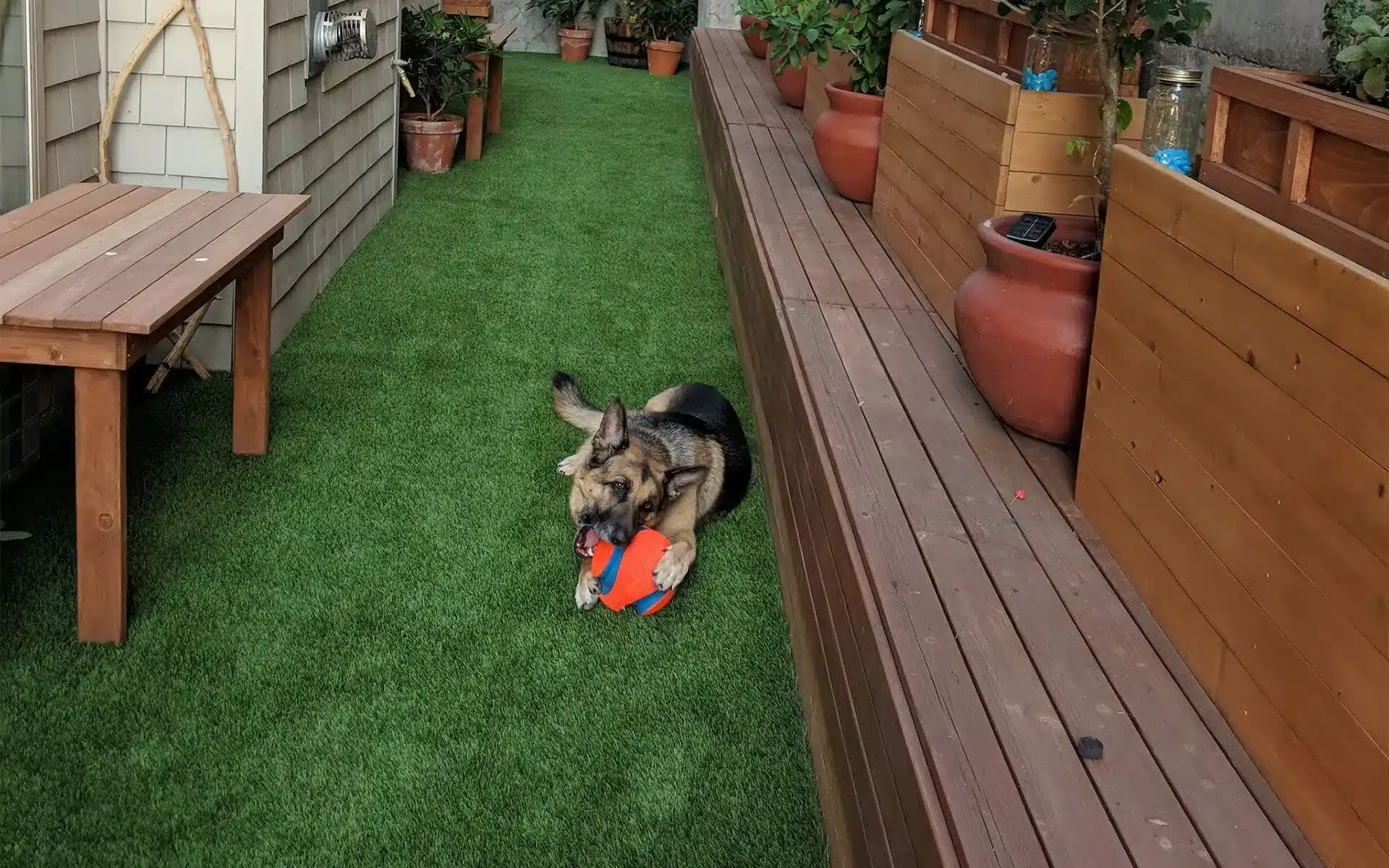
Artificial Turf Pet Area Installation in Richmond is one of the most technically specific service types we provide because pet use creates different drainage and surface hygiene demands than general residential or commercial turf. Dog runs on Long Meadow Farms equestrian properties typically cover larger areas than standard subdivision pet yards, which means drainage capacity and infill depth must be scaled to the total volume of pet use the surface will experience. Turf Installation of Richmond scopes pet area projects around actual usage intensity — number of dogs, breed size, outdoor hours per day, and whether the area is enclosed or open-lot.
For families near Pecan Grove Elementary, Long Meadow Elementary, Mission West, and other Lamar CISD elementary feeder schools in Richmond, the backyard pet zone is often also the children's play zone. In these dual-use spaces, turf specification must balance pet drainage performance with surface feel and blade type appropriate for children playing close to the ground. We discuss these competing requirements during the site visit so the final specification addresses both.
Drainage design is the most critical element of pet turf installation. Richmond-area soils — particularly the clay-dominant profiles across Fort Bend County — resist vertical drainage without a well-prepared aggregate base that extends drainage capacity below the clay layer. Turf Installation of Richmond sizes the base aggregate depth to the pet use intensity and evaluates drainage path geometry so water and liquid waste move efficiently off the surface and through the system rather than pooling under the turf.
Perimeter containment and gate entry detailing matter for pet areas in ways that general turf installation does not demand. Gate entries in dog runs are high-wear points where infill compacts quickly and edges can separate under repeated impact. We detail these transition areas specifically during pet area installation to minimize early failure in the highest-use perimeter zones.
What Is Included in Pet Area Turf Installation
Pet area installation scope is built around drainage performance, surface hygiene, and durability under high-frequency animal use. Scope items include:
Pet Use Assessment and Drainage Scoping
We evaluate pet count, size, outdoor hours, and soil drainage capacity to specify base depth and drainage architecture appropriate for the site.
Deep Base Preparation for Pet Drainage
Base aggregate is installed to a depth that supports drainage through Fort Bend County's clay-dominant soils. Drainage grade is confirmed during compaction.
Pet-Appropriate Turf Specification
Blade type, pile height, and face weight are selected for pet use — typically heavier face weight with antimicrobial infill to manage surface hygiene.
Antimicrobial or Deodorizing Infill
Infill options with antimicrobial properties are recommended for dog-specific pet areas to control surface odor between cleaning cycles.
Gate Entry and High-Wear Perimeter Detailing
Entry points and high-traffic perimeter zones are detailed with extra edge anchoring and infill to reduce early failure in the highest-impact areas.
Drainage Test and Final Walkthrough
Water is applied to the surface post-installation to confirm drainage flow rate and surface clearing. Maintenance guidance is provided including cleaning intervals and infill management.
Pet Area Installation Process
Our pet turf installation process in Richmond prioritizes drainage performance and long-term surface hygiene from site assessment through final confirmation.
1. Pet Use Consultation and Site Assessment
We discuss pet count, breed, outdoor schedule, and existing drainage conditions. The site is walked to evaluate soil profile, drainage grade, and perimeter constraints.
2. Scope and Specification
Base depth, turf specification, infill type, and perimeter detailing approach are documented before work begins.
3. Vegetation Removal and Excavation
Existing vegetation is removed and site is excavated to the specified depth. Soil drainage capacity is confirmed during excavation.
4. Base Installation
Aggregate base is installed in lifts and compacted to specified depth. Drainage grade is confirmed.
5. Turf and Infill Installation
Pet-appropriate turf is placed, seamed, and anchored. Gate entries and high-wear zones are detailed. Antimicrobial infill is applied and worked into the pile.
6. Drainage Confirmation and Final Walkthrough
Water test confirms drainage rate. Pet care and maintenance guidance is reviewed with the homeowner.
Pet Area Turf Applications Across Richmond and Fort Bend County
Pet area turf serves a range of property types and pet ownership scenarios across Richmond and surrounding communities.
Dog Runs on Long Meadow Farms Large-Lot Properties
Large-acreage properties in Long Meadow Farms equestrian sections with working dogs or multiple large-breed dogs benefit from full-scale pet turf drainage systems scaled to high-volume use.
Family Backyard Pet and Play Zones Near LCISD Schools
Dual-use pet and children's play areas on properties near Pecan Grove Elementary, Long Meadow Elementary, and Mission West require turf specifications that balance pet drainage with safe play surface characteristics.
Enclosed Pet Areas on Pecan Grove Plantation Properties
Smaller enclosed dog areas under or near mature canopy trees where natural grass will not grow and drainage requires specific base architecture to manage leaf and organic material accumulation.
Kennel and Boarding Facility Dog Yards
Commercial pet facilities in Richmond and Rosenberg with high dog-per-day volumes require commercial-grade drainage capacity and surface hygiene characteristics that residential pet turf does not always meet.
Why Pet Drainage Design Matters for Fort Bend County Properties
Richmond-area pet turf failures most often trace back to inadequate base depth for the drainage demands placed on the system. Fort Bend County's clay soils do not support vertical drainage the way sandy or loamy soils do — base aggregate must extend deep enough to get liquid drainage past the clay layer and allow gravity to move it away from the surface. Turf Installation of Richmond sizes base depth to the actual pet use loading at the property, not a minimum standard. Homeowners with large or multiple dogs on Long Meadow Farms properties get a different drainage specification than a family with one small dog near Mission West — and both get a scope that reflects what their specific property needs.
Factors That Affect Pet Area Installation Scope
Pet turf installation pricing reflects drainage requirements, usage intensity, and surface specification. Key factors include:
Pet Use Intensity
Number of dogs, breed size, and daily outdoor hours determine drainage capacity requirements and infill specification, which affects both base depth and material costs.
Soil Drainage Profile
Fort Bend County's clay soils often require deeper aggregate base profiles than sandy or loamy sites to achieve adequate drainage performance under pet use.
Turf and Infill Specification
Pet-appropriate turf with antimicrobial infill typically carries a higher material cost than standard residential turf but is necessary for surface hygiene management.
Installation Area Size and Shape
Total square footage and perimeter complexity — including gate entries, runs between structures, and areas adjacent to tree roots — affect both labor and material.
Perimeter and Entry Detailing
Gate entries and high-wear perimeter sections require additional detailing work that adds to labor scope but significantly extends the useful life of the pet area.
Service Area Coverage
Turf Installation of Richmond provides pet area turf installation throughout Richmond and Fort Bend County, including Long Meadow Farms equestrian sections, Pecan Grove Plantation, Mission West, George Ranch, Rosenberg, Fulshear, Sugar Land, Needville, Simonton, Orchard, Wallis, Brookshire, and surrounding communities.
Frequently Asked Questions
How does Turf Installation of Richmond handle drainage for pet areas on Fort Bend County clay soils?
We size aggregate base depth to get drainage below the clay layer so liquid waste moves through the system by gravity rather than saturating the base. Drainage grade is confirmed during compaction before turf is placed.
What infill is recommended for dog runs in Richmond?
We typically recommend antimicrobial or zeolite infill for pet areas to manage surface odor between cleaning cycles. Infill selection is discussed during the consultation based on pet count and use intensity.
Can pet turf be installed under large trees in Pecan Grove Plantation?
Yes. Shaded areas under canopy trees where natural grass will not grow are actually well-suited for pet turf. We adjust base preparation to account for root zone influence and manage drainage around root concentrations.
How long does a pet area installation take?
Most residential dog run and pet area installations are completed in one to two days depending on size and base preparation requirements. We provide a specific timeline after the site visit.
What maintenance does pet turf require?
Solid waste removal on a regular schedule is essential. Periodic rinsing, infill inspection, and surface grooming extend system life. We provide a written maintenance guide at project completion.
Do you install pet turf for commercial kennels and boarding facilities in Fort Bend County?
Yes. Commercial pet facilities have different drainage and surface hygiene requirements than residential pet areas. We scope commercial pet turf with drainage capacity and surface specifications matched to the facility's dog volume.